For Organizations
Whether an organization reaches its most important goals comes down to whether its people can grow into what the strategy requires of them.
Incandescent — the advisory firm of which Minds at Work is a part — works with leaders at organizations on goals that call for development, not just different execution.
When organizations are deeply committed to a new destination, and still can't reach it, what is getting in the way?
70%
of large-scale change initiatives fail to meet their objectives — a finding consistent across McKinsey, Kotter, and decades of organizational research.
If this goal has already survived a restructuring, new leadership, or a culture program — and still hasn't moved — the explanation is rarely that you chose the wrong solution. It is more likely that the problem runs deeper than those solutions were designed to reach.
This happens at the individual level and at the organizational level. The patterns that define how an organization operates today — how decisions really get made, what feels safe to say, which norms go unquestioned — are not changed by persuasion, new messaging, or better process design. They change when enough people, at the right levels, grow beyond what those patterns require of them. That is an adaptive challenge, not a technical one.
The work we do with organizations creates the conditions for that kind of development to happen — in the flow of real work, connected to real strategic priorities, not in a separate learning track alongside them.
The research
Built on three decades of research by Robert Kegan and Lisa Laskow Lahey at Harvard.
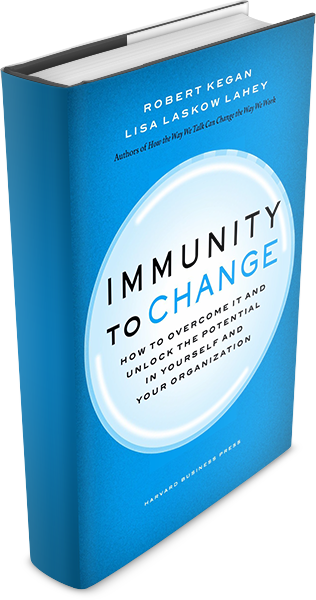
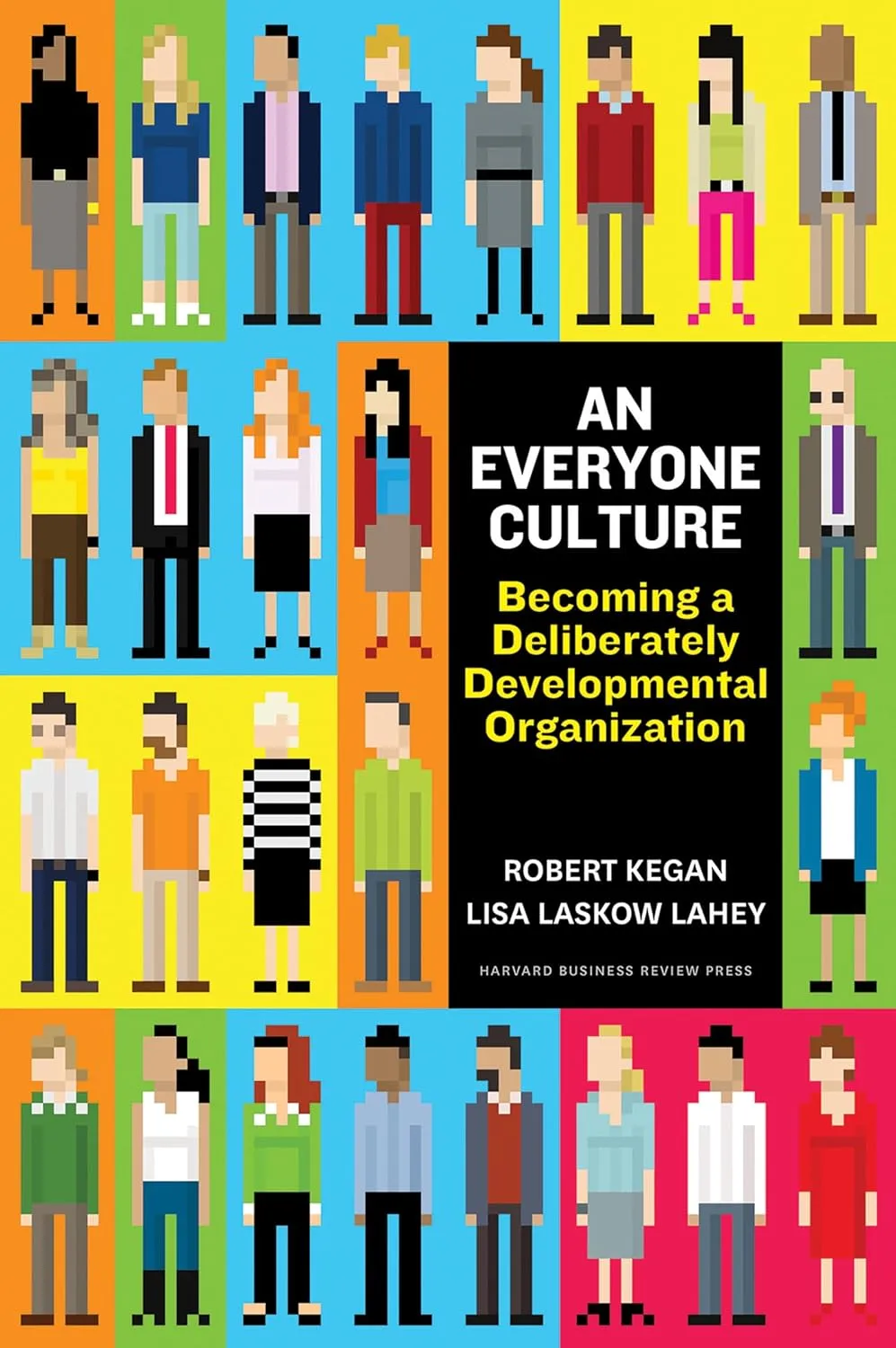
Kegan and Lahey's constructive-developmental theory established something counterintuitive about how adults grow: development isn't about accumulating knowledge or skills — it is a structural shift in the very way a person makes meaning of the world. Their applied work, beginning with Immunity to Change™ and extending into the Deliberately Developmental Organization model, brought that theory into organizational life in ways that practitioners and leaders can actually use. The organizations documented in An Everyone Culture — Bridgewater Associates, Decurion, and Next Jump — are among those that have pursued this at scale, each in a different industry, each arriving at a different version of what a deliberately developmental culture looks like in practice.
“
The work of delivering performance and the work of growing and changing go hand in hand — each fueling the other.
Robert Kegan
The work
How we work with an organization depends on the problem at hand.
These are not options to choose from in advance. They are a range of responses to what each organization actually needs — and the right starting point depends on what the organization is facing. Most begin with a diagnostic conversation.
01
Diagnosing what's blocking a strategic priority
Many organizations begin here. Before designing any intervention, we work with the leadership team to see clearly what is actually getting in the way of a specific strategic priority — the adaptive challenges, individual and collective, that are holding the current reality in place. The diagnosis itself is often clarifying in ways that reshape what the right response is. It is a practical beginning, not a precursor to a predetermined program.
02
Engaging the team at the top
We work with the leadership team as a whole — each member individually on their own highest-priority adaptive challenge, and collectively on the team's own immune system: the competing commitments shaping how they lead, how they make decisions, and how they work together. The senior leader participates fully. That is what shifts the psychological contract for everyone else.
03
Scaling ITC across a leadership population
For organizations that need the developmental work to reach a larger leadership population, we design cohort programs and time-limited developmental sprints that bring Immunity to Change™ to hundreds of leaders at once. We integrate with the real strategic challenges they are working on, not run alongside them. We also build internal facilitation capability so that the work can continue without external support.
04
Becoming a Deliberately Developmental Organization
A Deliberately Developmental Organization is one where growth is woven into how work gets done every day — not offered as a separate program or benefit. The organizations that pursue this path discover it changes not just culture but their capacity to execute on strategies that have previously eluded them. It is years-long work, and it requires a particular kind of commitment from the top.
Who we work with
Organizations at moments when what got them here isn't enough to get them where they need to go.
Minds at Work has partnered with organizations across industries — from global professional services firms and Fortune 500 companies to healthcare systems, technology companies, educational institutions, and public-sector organizations. What these organizations share is not a sector but a situation.
In each case, the gap that matters most is a developmental one: between the demands the organization is facing and the current capacity of its people — individually and collectively — to meet them.
01
A transformation that keeps stalling
A company launches a new strategy, a new operating model, a restructuring. Everyone agrees it's the right direction. And yet something invisible is working against it — people find themselves with one foot on the gas and one foot on the brake. The deeper issue: the strategy demands a way of leading and collaborating that those charged with executing it have not yet grown into. New skills, new processes, and new incentives aren't enough when the real barrier is how people make meaning of the demands being placed on them.
02
Leadership at the top as the bottleneck
CEOs and executive teams who sense that their own way of seeing the business has become the ceiling. These engagements tend to start with individual coaching or a team-level intervention and evolve into something broader as the leaders begin to experience what it means to surface and work through the hidden assumptions that constrain their effectiveness. In several cases, what began as a coaching relationship with a single leader became a multi-year partnership that reshaped how the organization thinks about development at every level.
03
The commitment to becoming a deliberately developmental organization
Companies where a visionary leader has decided that development should be the operating system of the business, not a bolt-on — a place where the daily fabric of work is designed so that people grow in the course of doing their jobs, not in programs separate from the work. The work in these settings often spans years and involves designing new practices, new feedback structures, and new ways of talking about what's hard, so that the organization's culture genuinely changes rather than just its training catalog.
04
Scaling proven developmental practices across the enterprise
Organizations that have seen the power of this work in a small cohort or a single team and want to bring it to hundreds or thousands of leaders. These engagements raise questions about infrastructure: how do you train internal facilitators, build systems for measuring impact at scale, and preserve the human depth that makes the work effective — without losing what worked in the first place.
05
Developing people in an era of AI
The organizations succeeding in this era will not be the ones that simply retrain their people on new tools, but the ones that invest in the deeper capacity of their people to adapt, to hold complexity, and to lead through uncertainty. The argument that resonates with a certain kind of leader: that developmental capacity is exactly what this work is designed to build — and that it is the one thing AI cannot provide.
Part of Incandescent
Working with Incandescent means entering a relationship built for the long journey, not a project. We are committed both to the result at hand and the greater destination — and our engagements are designed to evolve as the work and the organization evolve.
Every engagement begins with a conversation about what the organization is actually facing and whether this approach is the right one for it. If you're interested in exploring that, reach out and we'll make sure you're connected to the right people.
“Organizational elevation both flows from and drives human elevation. Strategies gain lift when people expand their capacity to see, decide, and act together in the new ways their collective work demands.”

Every engagement starts with understanding what the organization is actually facing.
There's no standard proposal. Only a genuine conversation about what the work would need to look like.
Start a conversation →